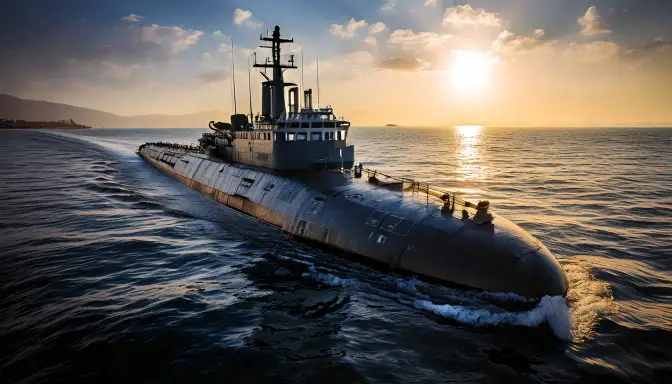


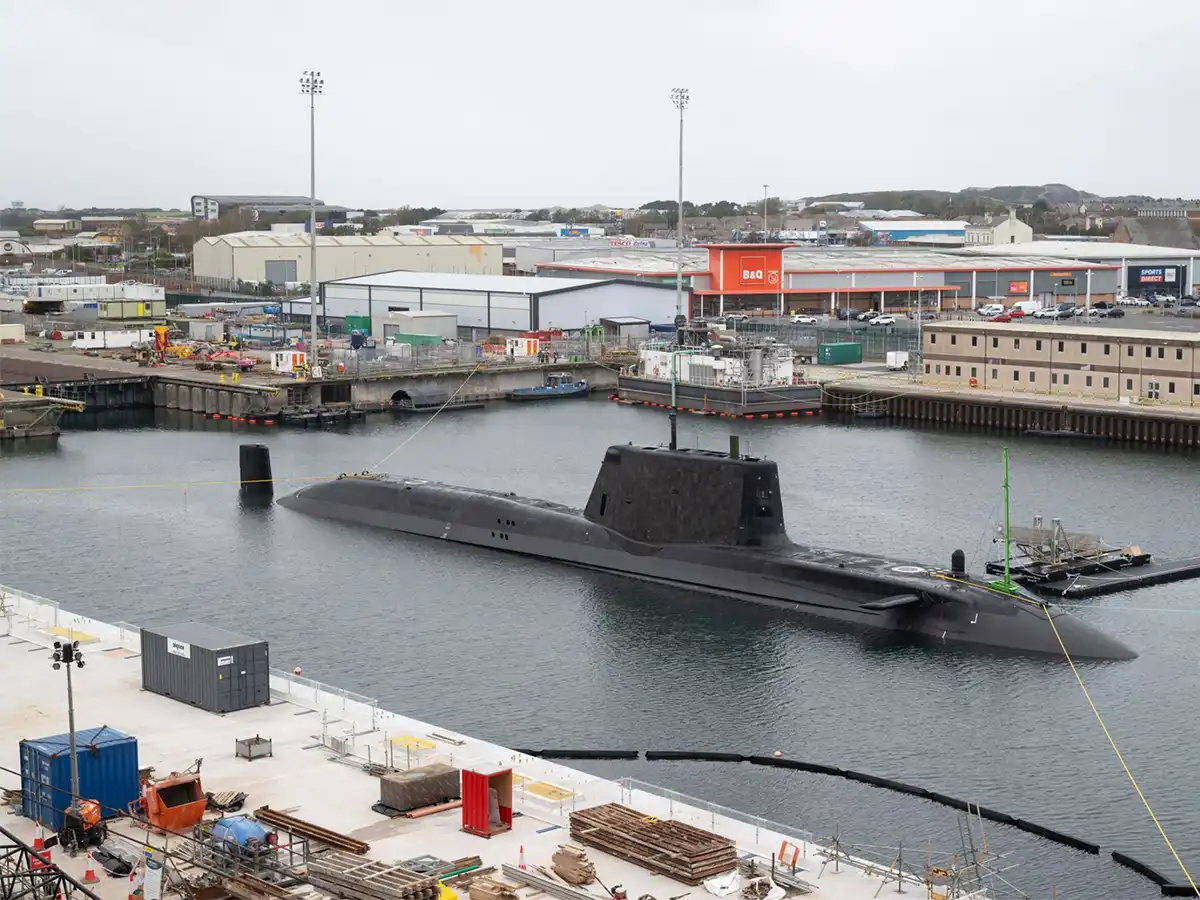
The Royal Navy crew has accomplished a significant milestone with the HMS Agamemnon's ‘trim dive,’ a three-day assessment conducted in Devonshire Dock. This critical testing phase is designed to validate the submarine's stability and safety. This development follows the official commissioning of the Astute class submarine into the Royal Navy by King Charles III and is an essential preparatory step before HMS Agamemnon transitions to His Majesty's Naval Base, Clyde, to join her sister vessels.
Pete Tumelty, the Astute Programme Director at BAE Systems’ Submarines business, expressed his appreciation for the teams involved, recognising their dedication and professionalism, which contribute significantly to national security and the continued legacy of Barrow in submarine design and construction.
Commander David ‘Bing’ Crosby, the commanding officer of HMS Agamemnon, remarked that the trim dive is a vital process for establishing the submarine’s internal weight, verifying water-tight integrity, testing sensors, and evaluating systems in preparation for the vessel's inaugural voyage. He commended the thorough planning and preparation required to achieve this crucial phase and noted the pride associated with the contributions made by all personnel involved.
In addition to producing all seven Astute class submarines—of which HMS Agamemnon is the sixth—BAE Systems is also engaged in the construction of four Dreadnought class submarines in collaboration with the broader Defence Nuclear Enterprise. The Dreadnought class will succeed the Vanguard-class submarines, which currently fulfil the Continuous At Sea Deterrent (CASD) mission for the Royal Navy. This mission is a fundamental component of national defence, ensuring that at least one submarine remains deployed at sea at all times.
Henry Musgrave, the Head of the Astute Delivery Team at the Submarine Delivery Agency, stated that the successful completion of HMS Agamemnon's trim dive represents a pivotal achievement in the objective of delivering operationally capable submarines to the Royal Navy, highlighting the exceptional collaboration within the Defence Nuclear Enterprise and the unwavering commitment to sustaining the UK's nuclear deterrent.
Furthermore, design initiatives for future nuclear-powered AUKUS attack submarines are underway as part of the trilateral agreement among the United Kingdom, the United States, and Australia. BAE Systems has expanded its submarine workforce from 10,700 in 2023 to 15,000 currently, with projections indicating a potential increase to 17,000 in the forthcoming years to accommodate the growing order portfolio.