
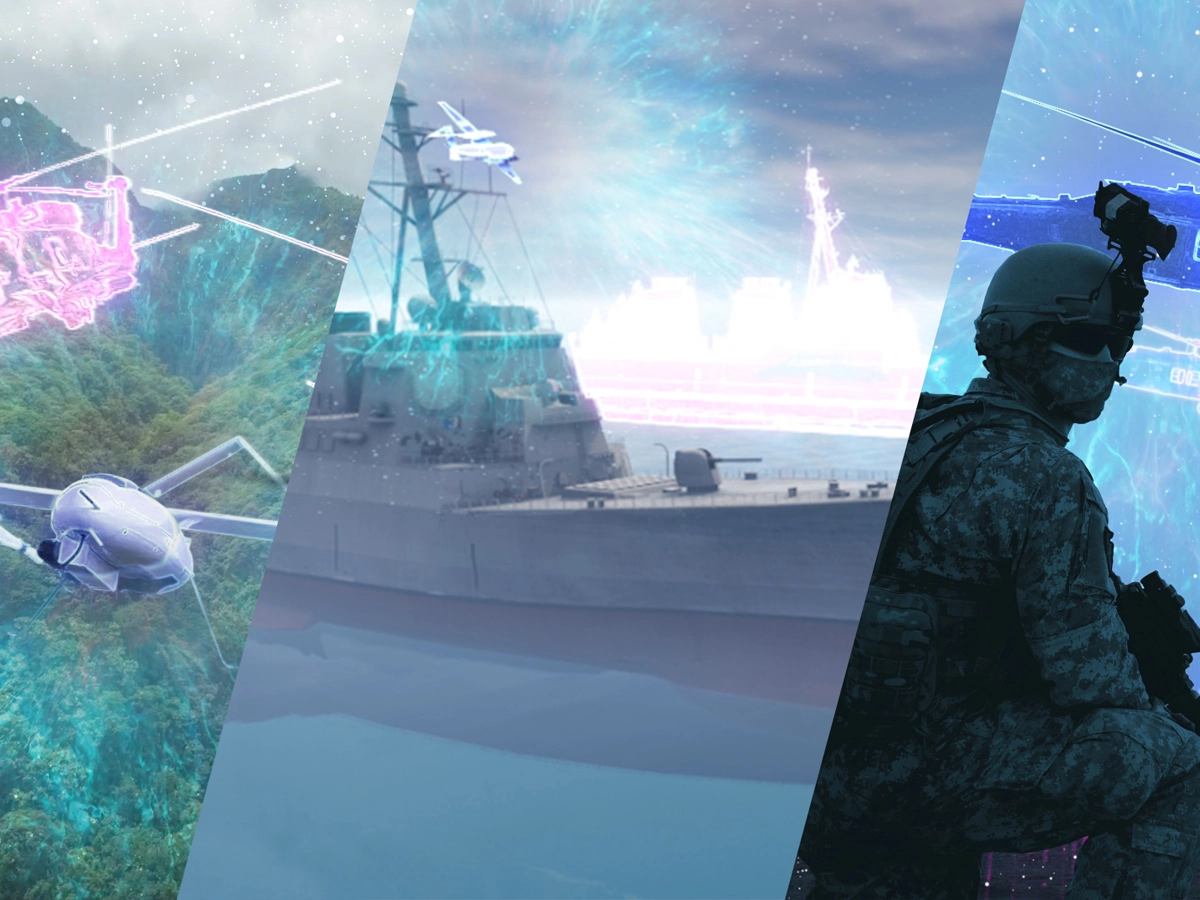
The maritime battlespace has never been more contested. Today’s adversaries are pairing long-range sensors, high-speed weapons, and multi-domain coordination to compress decision timelines and overwhelm traditional defences. The challenge is clear: in the next fight, the ship that can sense, decide, and act fastest will prevail.
Electronic Warfare (EW) is no longer a supporting act in this story - it is the connective tissue across the kill chain, from deciphering the environment to denying an adversary’s engagement and defeating threats.
Why it Matters Today
Many of the effects and weapons used by our adversaries rely on access to the electromagnetic spectrum. By controlling the spectrum, we deny adversaries the ability to employ systems across the entire kill chain sequence, from detection to assessment. This is important in conflicts where munition availability is limited, as we have seen in Ukraine.
Effective EW capabilities enable Naval surface combatants to conserve kinetic weapons. Additionally, EW provides decision space for when and where to deploy kinetic assets, this enables Naval surface combatants to remain in the fight longer.
Integrated, Layered Ship Defense
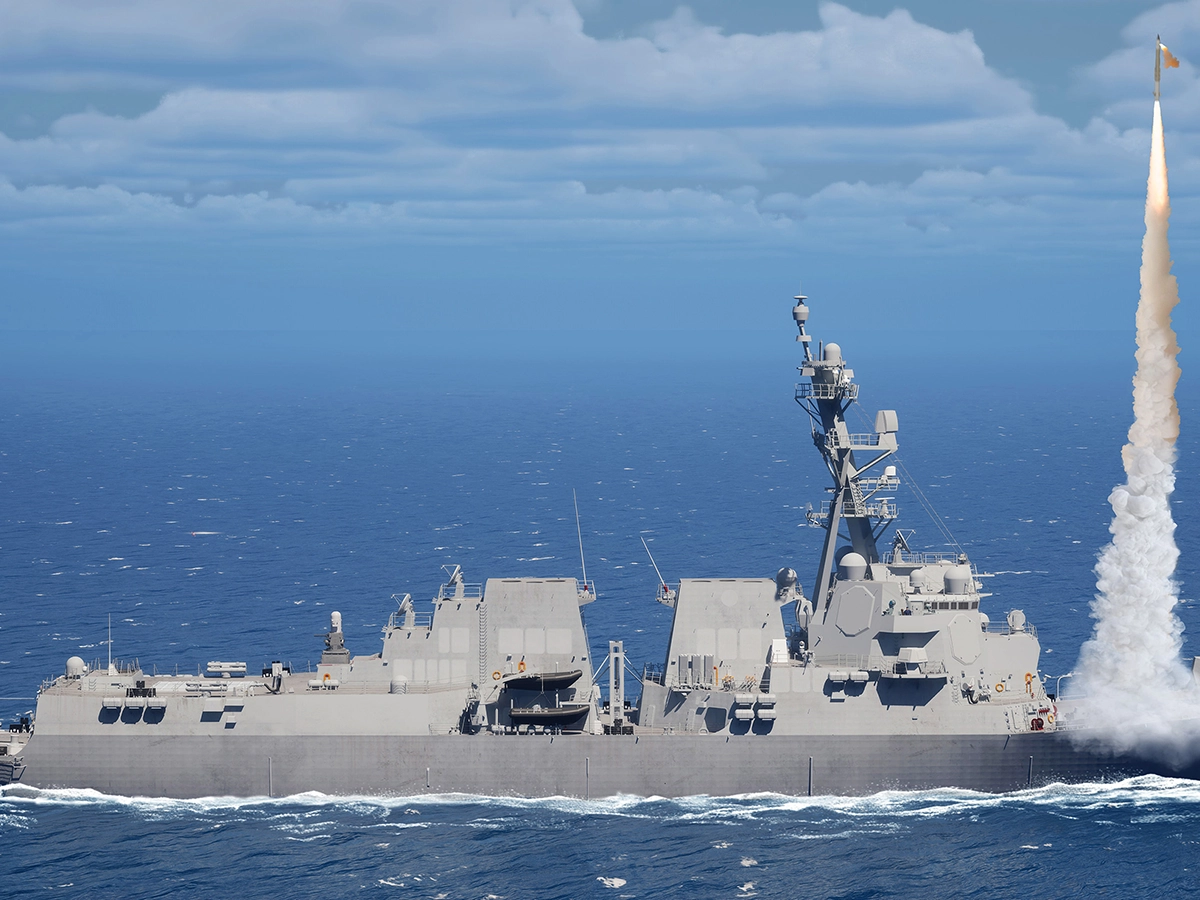
Electronic warfare is vital to the US Navy’s layered defence approach. It provides non-kinetic means of defending against threats, and it can be used in combination with other systems to neutralise or defeat the threat.
The U.S. Navy's EW capabilities are not limited to a single platform or system. Rather, they are designed to be integrated, providing a comprehensive and layered defence against today's and emerging threats.
The Navy is investing in a range of EW technologies, including electronic attack (EA), electronic support (ES), and electronic protection (EP).
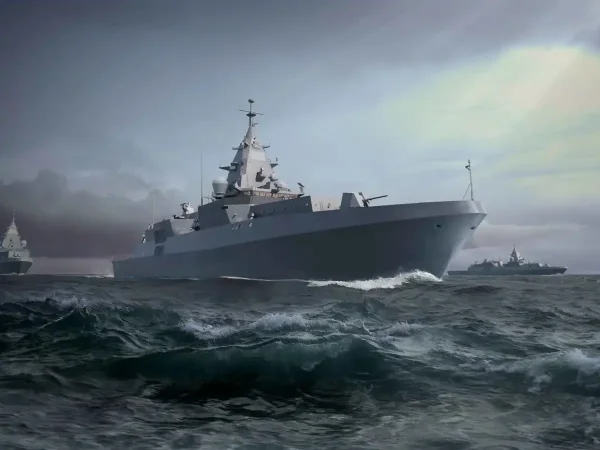
The Lockheed Martin manufactured AN/SLQ-32(V)six, and its scaled derivative, the AN/SLQ-32C(V)six, are the world’s most advanced ES systems. AN/SLQ-32(V)six provides critical early indication of threats in the operating area and has proven to be effective in real-world applications.
As a vital part of the Aegis Combat System, AN/SLQ-32(V)six contributes to providing a real-time battlespace picture that enables commanders to make quick decisions. The key to successful EW is a deep understanding of the electromagnetic spectrum and the ability to develop systems that can operate effectively and cooperatively in this domain.
Taking it one step further, Lockheed Martin is actively developing a Scaled Onboard Electronic Attack (SOEA) system, which offers an affordable, rapidly fieldable, next-generation EA system to the U.S. Navy. Leveraging Lockheed Martin’s innovative RF technology and maritime EW subject matter expertise, SOEA offers a low size, Weight, and Power (SWaP) solution to support onboard Soft Kill Terminal Defence.
As an open-architecture engineered system, SOEA will take the Surface Electronic Warfare Improvement Program (SEWIP) one step further to integrate the advanced ES capability that SLQ-32(V)6 provides with other shipboard systems to deliver advanced onboard EA capabilities, enhancing a ship’s ability to operate confidently in contested electromagnetic environments.
Developing systems that can detect and respond to threats in real-time, requires a high degree of sophistication and adaptability.
Open Architectures: The Foundation for Agility
In an era of rapidly evolving threats, flexibility is not a luxury - it is survival. Lockheed Martin is pioneering open‑architecture approach not only streamlines integration across legacy platforms but accelerates the delivery of next‑generation maritime electronic‑warfare capabilities to Sailors and ships at sea.
Open-architecture EW systems enable navies to integrate new sensors, deploy updated countermeasure techniques, and adapt to shifting missions more easily. The result is a capability that evolves at the pace of software, not shipbuilding.
Open architecture is enabled by the standardisation of interfaces and data formats across various system components. Standardisation means rapid development of new capabilities and facilitates collaboration among various stakeholders, including industry, government, academia, and small businesses. An open architecture is not just about having a standardised framework. It is about creating an ecosystem that encourages third-party developers to contribute and innovate. Open architecture in Lockheed Martin EW systems makes them inherently software-defined and better able to evolve with our customer’s requirements and as the maritime battlespace dictate.
Investing in the Future
Lockheed Martin has a 60-year history in electronic warfare, developing sophisticated technologies in electronic surveillance, attack, and protection that are used by the United States and its allies. Our understanding of the U.S. Navy's self-defence and strike missions enables us to provide integrated electronic warfare solutions that meet the dynamic needs of maritime operations. By tightly coupling electronic warfare capabilities with integrated combat systems, we can deliver decision superiority in complex scenarios with multiple threats in various domains.
As the maritime domain evolves, we are investing in developing new and innovative EW technologies. From advanced sensors and systems to AI-powered analytics and decision-support tools, Lockheed Martin provides capabilities to stay ahead of emerging threats.
Lockheed Martin is at the forefront of innovation in Artificial Intelligence (AI). Lockheed’s AI-enabled advanced, distributed, and cooperative EW systems can support a range of missions and operations. By leveraging open architecture and modular designs, Lockheed Martin can employ these technologies across all-domains and platforms.
Lockheed Martin is investing in more effective and efficient EW training and simulation tools. By providing naval operators with realistic and immersive training environments, Lockheed Martin is enhancing readiness to respond to emerging threats and support the kill chain.
Conclusion
The electromagnetic spectrum is a critical domain for maritime superiority, and advanced EW capabilities are essential for naval forces to operate effectively in this environment.
Lockheed Martin is uniquely positioned to integrate these capabilities in a true air and missile defence environment, leveraging our historical expertise, significant investments, and state-of-the-art technologies such as wide-band RF sensing, programmable countermeasures, and advanced algorithms. Our systems have been proven in real-world scenarios, demonstrating our ability to effectively deploy and utilise these technologies to save lives. With a strong history of success, Lockheed Martin is focused on delivering all these elements together to provide a comprehensive and integrated electronic warfare solution.
In the maritime fight of the future, EW will not be the last line of defence. It will be the first, most adaptable, and most cost-effective shield for the fleet. The nations that master the electromagnetic spectrum - through open architectures, integrated defences, and layered effects - will own the tempo of the fight.
The future fleet will not just sail through contested waters. It will own them.